
Before MCUBE onboards a client, we thoroughly examine their communication environment to identify all of their problems, lost opportunities, and areas where they lag behind competitors. One figure leapt off the page in our 2025 survey: After a call is dropped, 70% of clients never return the call.
How do businesses consider this? As a lost revenue? This cannot be limited to a loss of revenue but is a warning sign of reputational risk, erosion of trust, and a major gap in CX. Yet most businesses remain blind to this invisible drain; they might be investing in dashboards, CRMs, and adding employee count, but ignore a system to orchestrate their business communication.
Let’s see the aspect of inbound calls in detail through this blog and the need for an efficient system like Interactive Voice Response. We will explore the hidden cost of missed and dropped calls and how automated call routing with IVR quietly transforms them from lost opportunity into moments of loyalty and trust.
How Interactive Voice Menus Reduce Missed and Dropped Calls
An interactive voice response system functions as an unseen conductor of your customer conversations. They help businesses to make sure that no inbound call slips through, but reaches the business or the team at the right time. Interactive voice menus triage, prioritize, and guide each caller to the right destination, and help businesses to orchestrate their calls efficiently.
What is an IVR?
An interactive voice response system, commonly referred to as IVR, is a system that helps your inbound callers navigate through the menus with their keypad inputs. It works as a self-service IVR where callers can find their answers without agent help, and where human agents will be in the loop. The calls will be routed to the human agents for high-value or complex cases. This system helps to reduce the customer wait time, mitigates the long queues, and ensures that each inquiry lands on the right agent or department.
Let’s take an example. You run a real estate business in multiple locations. If you integrate IVR with your virtual or toll-free number, the caller can easily navigate through to connect with the location-based support and can speak with the agent in their preferred language.
But businesses often consider the benefits of IVR as call routing, but it is not limited to that. Let’s see some IVR capabilities.
- Customers self-serve common requests without a live agent
- Businesses can prioritize urgent inquiries
- Reducing repeated callbacks
- Improve first-time resolution and capture insights on CX.
How IVR Solves the CX Problem
Why do you think missed and dropped calls happen? Mostly for predictable reasons, overloaded agents, inefficient queues, or unclear routing. Interactive voice menus address each of these pain points:
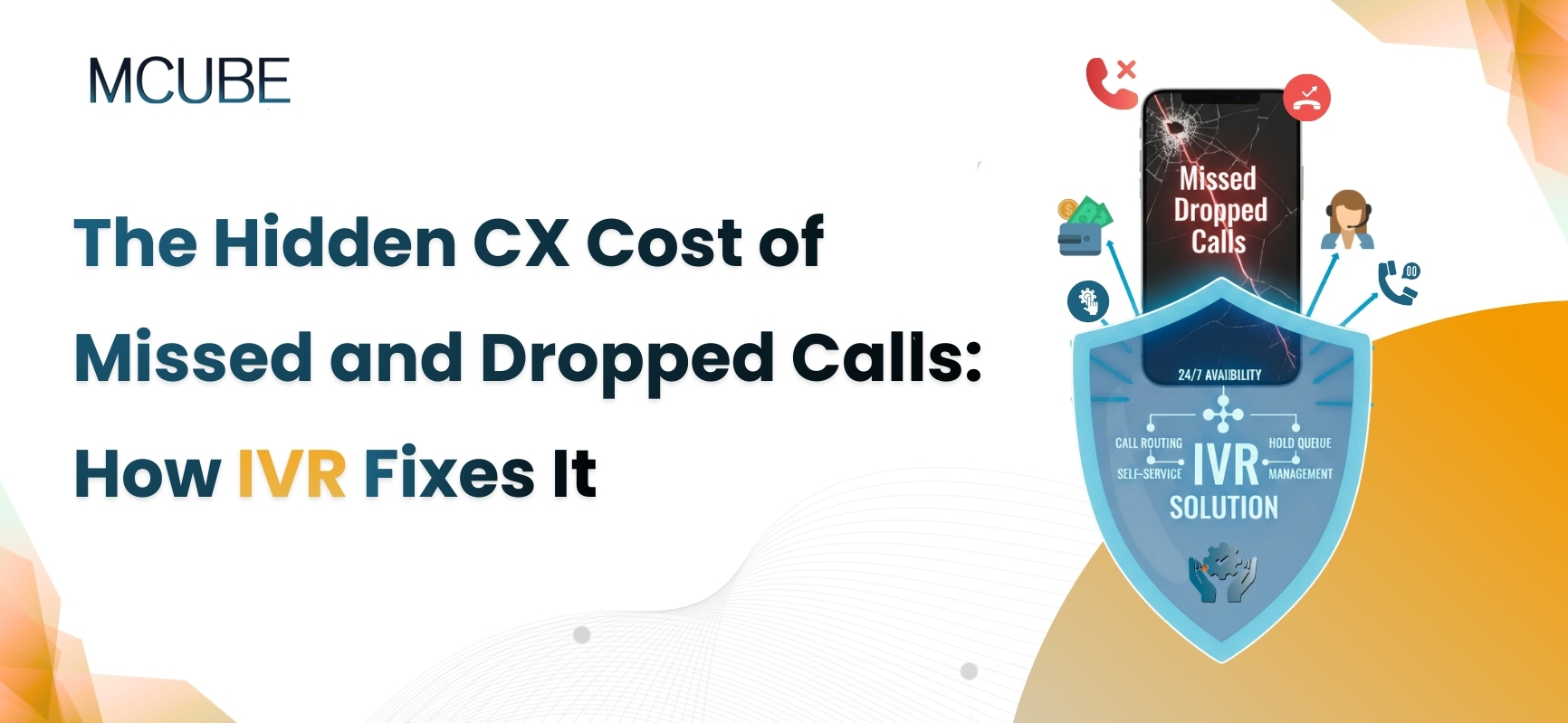
- Smart call routing: Automatically directs calls based on intent or department.
- Self-service & multi-level IVR menus: Let customers resolve simple tasks instantly, such as balance inquiries, status checks, or FAQs.
- Queue management: Organizes incoming calls intelligently, minimizing call abandonment and reducing wait times
- Insights & analytics: Tracks call patterns, peak times, and repeat queries, helping businesses in actionable intelligence.
With an interactive voice response system, businesses can turn potential CX disasters into seamless experiences, turning missed calls into opportunities to build trust and loyalty.
How to Set Up IVR for Maximum Impact
Before setting up a self-service IVR, it is crucial to understand its functionalities and understand that an IVR for handling high call volumes is more than just a call routing, but a strategic tool for your CX improvement. A well-designed IVR ensures each customer is guided efficiently, with urgent inquiries prioritized, so long queues or missed calls no longer undermine your CX.
- Map the call reasons and routing paths: Identify why customers reach and determine optimal routing for each scenario.
- Short menu options: Limit menu count to avoid confusion and help the callers navigate easily.
- Self-service for routine queries: Let callers resolve repeated queries or FAQs.
- Lead prioritization: Makes sure that the high-value calls are tracked easily in high call volumes
- Professional prompts: Include warm, clear prompts to improve engagement and caller satisfaction.
- Test the call flows: Simulate calls to identify friction points and refine them before going live.
- Collect feedback from agents and customers: Use the feedback reports to improve the experience.
- Optimize with analytics: Track your call patterns, dead air, abandonment rates, or repeated queries to improve the IVR over time.
Turn Call Failures into CX Control with IVR
How often do you monitor your CX ecosystem? If customer experience is your last factor to keep an eye on, you will fail in building a customer-centric ecosystem for both new customers and retaining old ones.
By managing the chaos of high volume or abrupt increases, interactive voice response systems can be the builders of resilience. They reinforce dependability and responsiveness by assisting you in answering calls before they disappear, prioritizing urgency, and precisely guiding clients. Beyond automation, IVR transforms the lines into customized experiences, gathers data from interactions, and assists in handling high-stakes calls.
We are facing a time when customers measure brands in seconds; here, a missed or abandoned call is a business loss. To turn each call into a calculated advantage, protect your CX, build loyalty, invest in an efficient IVR platform, grow your conversation, and scale your business.