
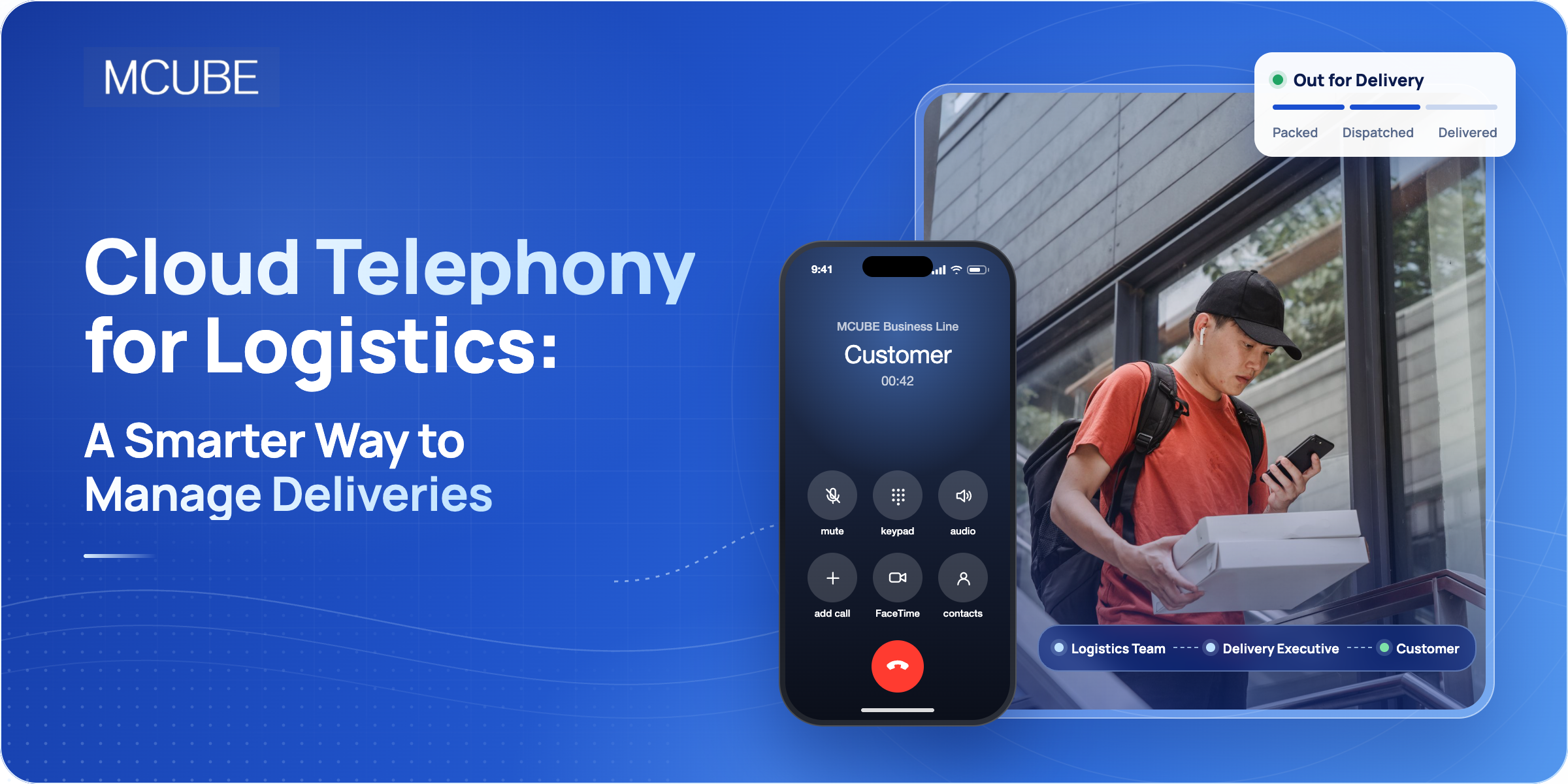
A delivery executive arrives at a customer’s location but there is no one there to attend the delivery. The customer is waiting for a reply, the customer service has several problems, and the next delivery is delayed. It’s supposed to be a simple drop off, but it becomes a series of calls and delays.
In logistics, timely communication is as important as getting a package to the correct destination, and situations such as these are not uncommon. For a logistics company, cloud telephony for logistics is an excellent solution to answer the question how companies can integrate the delivery team, customers and support in one communication system. It streamlines calls, automates updates, and enhances coordination, empowering logistics companies to deliver a superior customer experience more efficiently.
What Is Cloud Telephony for Logistics?
Cloud telephony is an internet-based business calling system that allows companies to manage calls without relying entirely on conventional telephony infrastructure. It works like a common thread between delivery executives, dispatch teams, warehouses, and customer support that helps logistic companies operate seamlessly through a centralized platform.
Call routing, virtual numbers, call recording, and CRM integration like features allow teams to handle customer interactions all in one place. Interactive Voice Response systems (IVRS) can route callers to the correct department and call logs can monitor communication.
Cloud telephony for logistics helps companies manage increasing call volumes, organizing delivery attempts and answering customer questions without introducing complexity into their communication processes.
How Cloud Telephony for Logistics Enables Smarter Deliveries
Prompt communication is essential for logistics teams to overcome delivery-related problems, before customers are impacted. Here are the possibilities of how logistics cloud telephony can help enhance delivery operations.
- Faster customer coordination: Delivery executives can call customers to check availability, address, and give arrival notifications.
- Fewer failed delivery attempts: Teams can get in touch with customers before the order french their doorstep and arrange for another delivery attempt if the customer is not available.
- Better call management: IVR and call routing send all delivery-related calls to the appropriate team, eliminating unnecessary transfers and wait times.
- Secure communication: Virtual Business Numbers and number masking can shield personal phone numbers when the delivery executives call the customers.
Together, these capabilities help businesses reduce avoidable communication gaps, manage delivery schedules more effectively, and make the delivery process more predictable for customers.
Keep Customers Updated with Automated Calls and Messages
Customers should not have to reach out to the customer support repeatedly to check their order status. Automated communication enables businesses to communicate updates at various points in the delivery process.
For instance, if there is a delay in dispatching or rescheduling, logistics teams can send automated voice calls, SMS and WhatsApp messages to inform customers about it. Such notifications can be sent via integrations with order management or delivery systems.
Automation also saves time for employees as they create routine calls. Support agents are able to concentrate on complaints, urgent delivery concerns, and requests which would require them to attend to personally. This helps logistics service providers to communicate with customers more easily, who deal with hundreds or thousands of orders as orders grow.
Improve Delivery Operations with Call Analytics
Managing calls is only one part of the process. Businesses also need to understand whether their communication efforts are working.
Call recordings, analytics, and centralized dashboards help managers review customer interactions, identify unanswered calls, and spot recurring complaints. AI-powered post-call analysis can provide additional insights by summarizing conversations and highlighting common concerns.
A Cloud Contact Center can help support teams bring the customer interaction into a more streamlined process and track service quality. These insights can be reviewed regularly to help managers understand gaps in response and availability, optimize response processes, and make better staffing decisions.
The result is a more informed approach to customer service, with communication data helping teams improve delivery coordination over time.
Protect Privacy with Number Masking
Delivery executives often call customers from personal phones. That exposes private numbers on both sides and leaves the company with no proof the call happened. Virtual Business Numbers fix this by routing every call through a company-owned number. Both parties stay anonymous, and each call is logged automatically.
For riders, it also means no unwanted calls after their shift ends. For customers, it means a number they can recognize and trust.
What to Look for in a Cloud Telephony Solution for Logistics
Before choosing a provider, logistics businesses should assess whether the platform supports their day-to-day operations. Consider these factors:
| Factor to Consider | What to Look For |
|---|---|
| Call Routing and IVR | Directs customers to the right team without unnecessary transfers. |
| Automated Notifications | Supports delivery updates, customer alerts, and follow-ups. |
| Integration Options | Connects with existing CRM, order management, and delivery systems. |
| Call Analytics | Helps managers track unanswered calls and review customer interactions. |
| Scalability and Security | Handles increasing call volumes while protecting customer information. |
How MCUBE Supports Logistics and Delivery Businesses
MCUBE offers cloud-based communication tools for logistics companies, enabling better coordination, and streamlining communication support for customers. It has IVR and call routing capabilities that direct incoming calls to the appropriate department, and automated voice calls and messaging provide timely delivery notifications and follow-ups with customers. While delivering a call, number masking can be used to mask personal phone numbers, and call recording and analytics can be used to review calls to find service gaps.
MCUBE’s Cloud contact center capabilities also help businesses organize and manage customer interactions as call volumes grow. Logistics companies can assess MCUBE’s features based on their call volumes, delivery workflows, and integration requirements.
Conclusion
Efficient delivery is more than just about routing and tracking shipments. Customers require a timely update, delivery people need to know when to communicate with customers, and support teams need to have visibility into conversations. Cloud telephony for logistics combines all these communication needs into one place, through calling, automation and analytics.
With solutions from MCUBE, businesses can explore ways to improve delivery coordination, manage customer interactions, and build a more consistent delivery experience.