
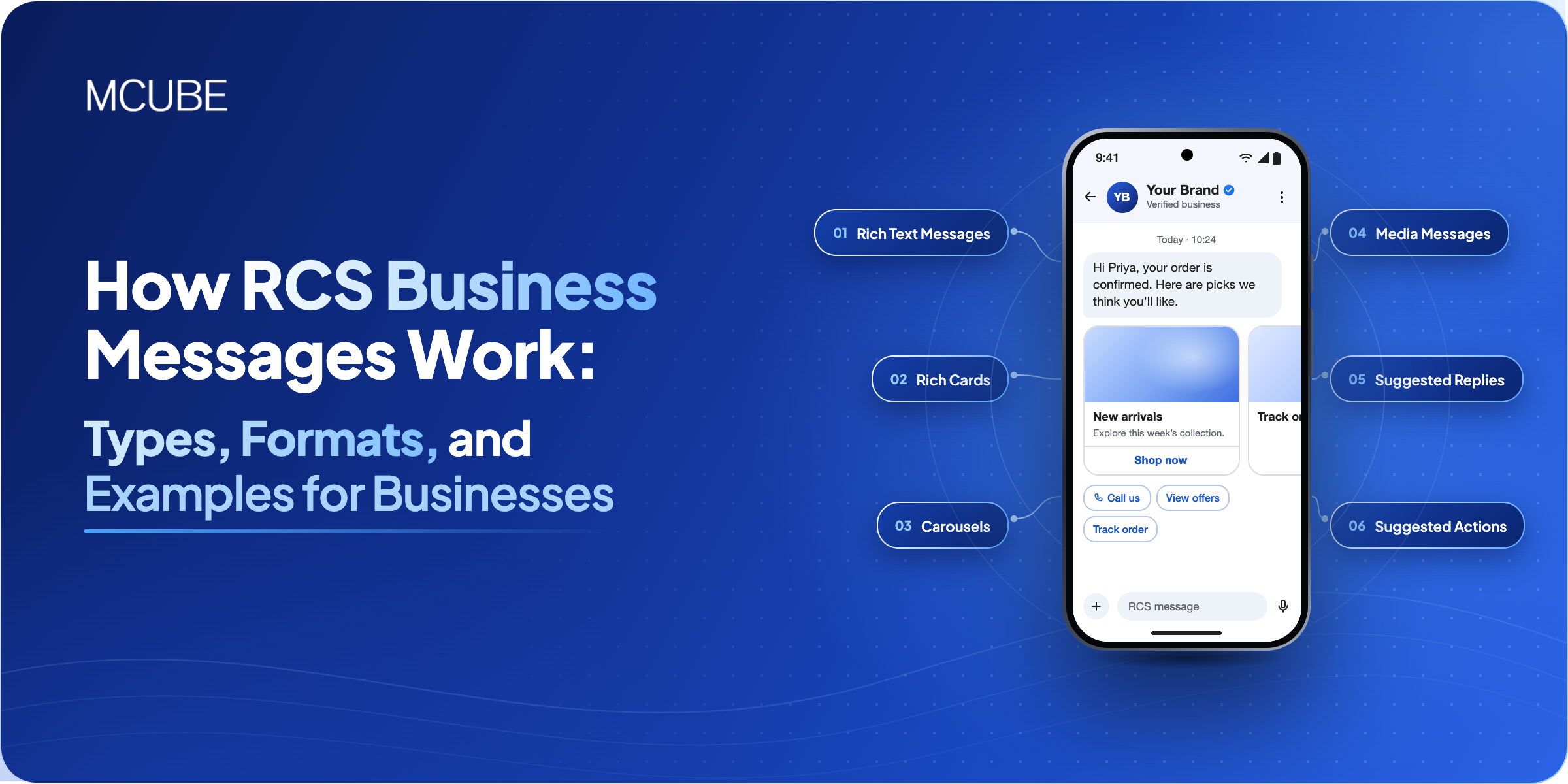
Suppose you get a message from a clothing company that is promoting a particular line of clothes. The message includes a product image, a brief description and a “Shop Now” button. The customer doesn’t need to read plain text and click on multiple links, but can simply access the offer from their messaging app.
This is what makes RCS Business Messages different from traditional SMS. They integrate branded communication, rich media and interactive elements into the messaging app that is native to the phone. They can be utilized for business promotion, information sharing, and customer engagement. Let’s learn about the various types, formats, and uses of RCS messaging.
What Are RCS Business Messages?
RCS stands for Rich Communication Services. It is the high-level messaging protocol that enhances the capabilities of SMS messages with multimedia and interactivity.
With RCS Business Messages, businesses are able to send messages with images, videos, carousels, clickable buttons and suggested replies to the customers, all with a company’s brand. Businesses can also add their brand, logo, and verified profile to make it easier to identify the sender.
RCS operates in the native messaging apps, unlike app-based messaging solutions. It does not need to install an app on the customer’s device. This is beneficial for marketing campaigns, transactional notifications, customer service, and sales communication.
What Are the Different Types of RCS Business Messages?
Depending on the communication needs of companies, they can employ various types of messages. Here are the more popular formats:
Text Messages
These are straightforward text messages with links and suggested replies. They’re great for confirming appointments, payment reminders, short updates, and more.
Media Messages
The messages come in the format of standalone images, video, audio or documents. They can be utilized by businesses to publish product pictures, promotional videos, tickets, and invoices.
Rich Card Messages
Rich cards are text cards with images or videos and interactive buttons and a title and description. They work well to emphasize a specific product, service or promotional offer.
Carousel Messages
Carousels are an interesting format for showing several rich cards in a horizontal scrolling format. Retailers can feature them as a way to display various products, and travel companies can promote various travel destinations.
Suggested Replies and Actions
These are the content that facilitate interaction and make conversation easier. Customers can choose from a set of pre-prepared replies or respond by visiting a website, calling a business or visiting a location.
Understanding Different RCS Message Formats
Depending on the format of the RCS message, the information will be presented to the customer. Each one can choose a desired format according to the campaign targets.
| RCS Format | Key Elements | Best Use Case |
|---|---|---|
| Basic Text | Text, links, suggested replies | Alerts and reminders |
| Rich Media | Images, videos, audio, documents | Product promotions and updates |
| Rich Cards | Images, titles, descriptions, CTA buttons | Product and service promotions |
| Carousel | Multiple interactive cards | Product catalogs and multiple offers |
| Interactive Messages | Suggested replies and action buttons | Customer support and inquiries |
For example, an e-commerce brand can use a rich card to promote a new collection. It can use a carousel to showcase multiple products and suggest actions to direct customers to its website.
RCS Business Messages: Examples Across Different Industries
RCS could enhance the day-to-day customer interaction in various industries in a way that makes it more engaging and convenient.
- Retail and E-commerce: Share product photos, discounts, promotions, and shopping links to motivate customers to explore and shop for products.
- Banking and Finance: Send reminders of payment due dates, transaction information, account updates, and more critical reminders.
- Healthcare: Send reminders, directions to clinic, and rescheduling or confirmation choices.
- Travel and Hospitality: Send booking confirmation, travel updates and information, hotel information, and travel related information.
- Education: Post admission notifications, course information, Application updates, and Enquiry information.
For instance, a healthcare provider can send an appointment reminder with two buttons: “Confirm Appointment” and “Reschedule.” Likewise, a travel agency can provide a confirmation to the customer along with the itinerary details and a link to help the customer manage their booking.
The following are examples of how RCS messaging can enhance business interactions with customers.
How to Choose the Right RCS Message Format for Your Business?
The selection of the most appropriate format depends on your communication goal and desired action or behavior from your customers.
Here are some practical tips:
- For quick updates: Use text messages for reminders, confirmations, and short notifications.
- For product promotions: Use rich cards to showcase products and include images, descriptions and call-to-actions (CTA) buttons.
- For multiple offerings: Use carousels to demonstrate a range of products, services, or promotional deals.
- For customer support: Add suggested replies to assist customers to resolve the common issue quickly.
- For driving conversions: Include suggested actions such as Shop Now, Book an Appointment, or Call Us.
Maintain content that is relevant and keep your CTA clear. An overloaded message can be challenging to navigate.
How MCUBE Helps Businesses with RCS Messaging
Choosing the right messaging platform is crucial when determining a platform for consistent customer communication. With its business messaging solution, MCUBE supports businesses in adopting RCS Business Messages.
With MCUBE’s RCS platform, businesses can:
- Send Interactive Messages: Engage customers by sending rich media, carousels, and quick reply buttons.
- Build Brand Recognition: Properly utilize branded headers, logos, and customized message templates.
- Share Multimedia Content: Include images, video, audio and documents while having conversations.
- Track Message Engagement: Monitor delivery notifications and read receipts to track the engagement rate.
- Personalize Communication: Develop personalized messages for different customers and communication needs.
- Simplify Customer Engagement: Promote, update, and notify customers by sending interactive messages.
With RCS, MCUBE empowers businesses to transcend typical SMS and build more dynamic communication experiences.
Conclusion
Customer expectations around business communication are changing. Plain-text messages can provide information, but interactive formats can have greater engagement potential and provide opportunities for customers to act.
With RCS Business Messages, companies can combine branded communication, multimedia content, and interactive features within a familiar messaging experience. The key is to choose the right format for each communication objective.
Businesses looking to improve their messaging strategy can explore MCUBE’s RCS solution to create richer customer interactions and make business communication more effective.