
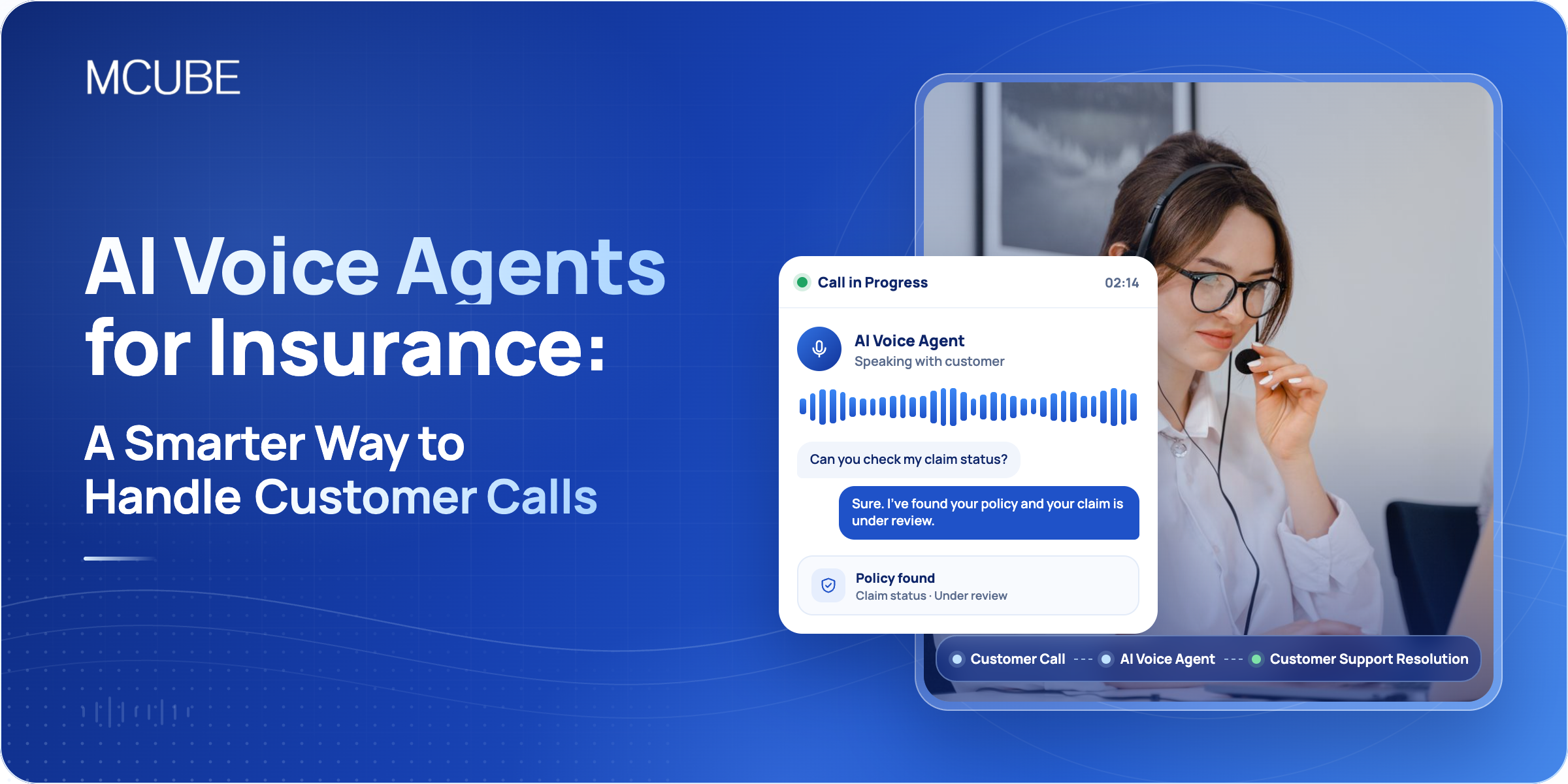
Imagine a customer calling their insurance provider to check a claim status. They wait on hold, navigate multiple options, and finally reach an agent who has to look up their details. With this much-delayed procedure, the insurance company is already creating a bad impression on the client. Now imagine receiving the same information within seconds, without waiting for a representative to become available. Wouldn’t it feel like the easiest solution to receive positive remarks from the clients?
AI voice agents for insurance can help in this regard. With automation of repetitive customer interactions, insurance companies can reply to customer queries quickly, handle high call volume and alleviate the strain on their customer service teams. Voice automation is emerging as a key component of today’s insurance operations, as customer expectations rise.
Why Traditional Call Handling Falls Short
Insurance calls arrive in waves. Hundreds of calls are received on days with a claim report and renewal season keeps the phone lines busy for an unpredictable period of time. Everyone else stands around waiting because most teams are staffed for an average day.
Older phone setups make it worse. A standard interactive voice response menu requires customers to press numbers at various points, and many people are too frustrated to keep pressing and eventually just give up and call an agent. After hours, calls go to voicemails. In the meantime, agents are spending a considerable portion of their time answering the same questions regarding the status of a policy and its due date, and manually typing notes into the CRM. Information is forgotten and the service is different each time.
What Are AI Voice Agents for Insurance?
AI voice agents are virtual assistants that interact with customers through phone conversations, employing speech recognition, natural language processing and conversational AI. They can listen and comprehend questions, know the purpose of the question asked by a customer, give responses that are relevant to the purpose of the question.
In contrast to traditional interactive voice response systems (IVRS) with menus and keypad entry, AI voice agents can facilitate more natural and two-way communication. They are able to respond to frequently asked questions, gather customer data, activate workflows, and escalate calls to human agents as needed.
6 Ways AI Voice Agents for Insurance Improve Customer Service
Insurance companies handle different types of customer calls every day. Many interactions involve repetitive questions, from policy inquiries to claim updates, that can be automated.
Here are six ways voice automation can help:
- Claims Registration: Collects initial claim details and walks customers through the claims reporting process.
- Policy Inquiries: Provide responses to common inquiries regarding policies, coverage, and policy terms.
- Premium Payment Reminders: Makes automated calls to remind customers about upcoming premium payments.
- Policy Renewals: Notifies policyholders of renewal dates and shares the next steps.
- Lead Qualification: Collects customer requirements and identifies potential insurance buyers.
- Claim Status Updates: Shares available claim updates and directs customers to the appropriate team.
Key Benefits of Using AI Voice Agents for Insurance
Beyond handling repetitive calls, voice automation can improve how insurance companies manage their daily operations.
Some key benefits include:
- 24/7 Customer Support: Customers can get assistance even outside regular business hours, without depending entirely on agent availability.
- Reduced Waiting Time: Automated conversations help customers get answers to common questions without waiting in long call queues.
- Better Team Productivity: AI voice agents manage repetitive inquiries, freeing up time for human agents to handle more complex cases.
- Consistent Communication: Approved answers and predefined workflows ensure consistency in customer communication.
- Scalable Operations: Businesses can manage increased call volumes without expanding their support teams with every increase in demand.
AI Voice Agents vs Traditional IVR: What’s the Difference?
Traditional IVR systems have helped insurance companies route incoming calls for years. However, customers today expect quicker responses and more natural conversations.
| Comparison Factor | Traditional IVR | AI Voice Agents |
|---|---|---|
| Interaction | Predefined menus | Natural conversations |
| Input Method | Keypad inputs | Voice-based responses |
| Call Flow | Fixed call paths | Intent-based conversations |
| Personalization | Limited personalization | Context-based responses |
| Functionality | Primarily routes calls | Answers queries and triggers workflows |
While IVR remains useful for basic call routing, AI voice agents offer more flexibility when businesses want to automate complete customer interactions.
How to Choose the Right AI Voice Solution for Your Insurance Business
Not all voice automation solutions will meet the needs of an insurance company. Businesses should take into account the following factors before choosing one:
- Conversation Quality: Is there a system to handle various accents, languages and customer questions?
- CRM Integration: Does it have access to relevant customer data and updates it?
- Workflow Automation: Can it deal with routine queries, reminders and follow-ups?
- Human Handover: Will it be able to pass on sensitive or complex conversations to the appropriate representative?
- Data Security: Is it able to adhere to proper data protection, consent control and call recording?
Choosing the right solution ensures that automation supports customer service without compromising the quality of interactions.
How MCUBE Helps Businesses Automate Customer Conversations
MCUBE’s AI Voice Bot helps businesses manage customer calls through conversational AI and automated workflows. Its capabilities can help insurance companies simplify routine communication and improve call management.
The platform offers features such as:
- Natural Conversations: Understands customer intent and responds to queries in a conversational manner.
- High-Volume Call Handling: Manages multiple inbound and outbound conversations simultaneously.
- Multilingual Support: Supports businesses in communicating with customers in multiple languages.
- Workflow Automation: Automates repetitive interactions and follow-ups, using call flows that are programmed.
- CRM Integration: Integrates with business systems to access customer information and record interactions.
- Human Escalation: Escalates conversations to human representatives when more assistance is required.
These features can be set up for policy inquiries, renewal reminders, lead qualification, and initial claim related interactions for insurance providers.
MCUBE also offers AI-powered post-call analytics, helping businesses review customer conversations and gain insights into call performance.
With its experience in cloud telephony and business communication, MCUBE helps organizations bring voice automation into their existing communication processes.
Conclusion
There’s a shift in the customer expectation for insurance services. Policyholders desire instant responses, up-to-date information, and easy-to-access communication channels with providers.
AI voice agents can be the ideal tool to streamline these situations, as they take care of repetitive questions, allowing human agents to focus on more complex matters that require personal attention or expertise.
As conversational AI for insurance continues to develop, combining automated voice support with human assistance can help insurers build more responsive and efficient customer service operations.