
Meera placed an order as a gift for her parents in Kolkata, last Diwali. She called the brand’s customer service number multiple times, as the delivery was being delayed. The call was connected to an agent after 11 minutes on hold. She never went back to the service for any more orders.
Stories like this play out in every sector, every day. A customer calls a hospital to book an appointment. Another calls a bank to enquire about a loan. Someone else wants an update on an online order. Although their requirements differ, they all expect one thing: quick, hassle-free assistance. For businesses handling hundreds or thousands of calls every day, meeting this expectation can be challenging. Long waiting times, missed calls, and incorrect call transfers can affect the customer experience.
This is where IVR technology makes a difference. It streamlines incoming calls, automates repetitive inquiries, and ensures that customers are directed to the appropriate departments, without having to wait unnecessarily. From healthcare and banking to retail and real estate, industries are using IVR to make customer communication more efficient.
What Is IVR Technology and How Does It Work?
Interactive Voice Response System (IVRS) is an automated telephony system that interacts with callers through pre-recorded voice messages and keypad inputs. It allows customers to select options from a menu and reach the appropriate department or access basic information without speaking to an agent.
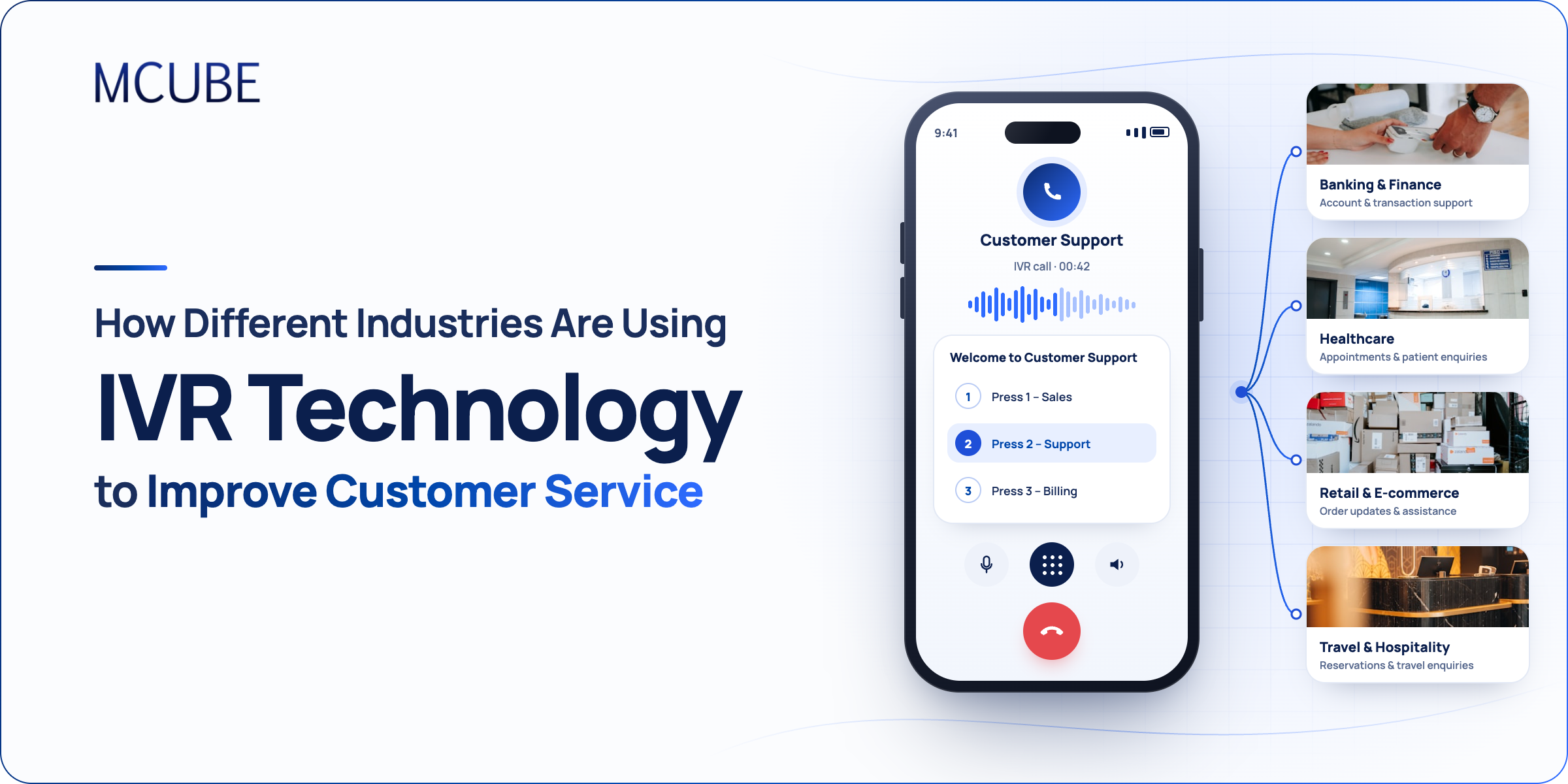
Here’s how a typical IVR call works:
- Welcome greeting: The caller is greeted with an automated greeting.
- Menu selection: These are options that are displayed on the screen such as sales, support, or billing.
- Call routing: Call is routed to the right team based on caller selection.
- Self-service: Customers can access certain information without agent assistance.
Modern IVR systems can also integrate with CRM platforms and business applications to support more organized customer interactions.
How Different Industries Are Using IVR Technology
Different industries have different customer service requirements. While a hospital may need to manage appointment inquiries, a bank may receive hundreds of calls about transactions and account services. Here’s how businesses across industries use IVR to manage these interactions.
Healthcare
Hospitals, clinics, and diagnostic centers receive calls for appointments, test bookings, reports, and consultation-related inquiries. IVR can assist in directing these calls to the right departments.
For instance, patients can select an option to book an appointment, inquire about test reports, or speak with the reception team. The automated reminders can also aid patients to stay on track with their scheduled appointments. This helps healthcare workers reduce the repetitive call handling time and focus more on providing patient-centric care.
Banking and Financial Services
Whether customers have questions about their accounts or are applying for a loan or inquiring about payments, banks and financial institutions have a variety of customer needs.
Through IVR, customers can get basic information regarding their account, call your loan service, and reach your banking department. Outbound IVR can also be utilized by banks to send automated notification messages, reminders, and alerts about transactions or services. If a sensitive transaction, then proper authentication and security should be designed into the call flow.
Education
Inquiries are received by the schools, colleges and educational institutions throughout the year from students and parents. These calls tend to be more frequent on the days of admission, when exams are held, and when fees are due.
IVR helps educational institutions organize these inquiries by offering a menu item for each of these queries. Parents may choose to learn more about the admissions process, fee information, exam dates or academic assistance. Calls are then directed to the suitable administration department, which assists institutions manage communication without burying their front-desk staff.
Real Estate
Real estate businesses regularly receive inquiries from prospective buyers, tenants, and property investors. Responding to every inquiry promptly can be challenging, particularly when multiple projects and sales teams are involved.
An IVR system can route the callers to the corresponding project or sales representative as per their call selection. Menu options can also help companies determine if a caller is interested in residential properties, commercial properties, or site visits. This aids in the prioritization of inquiries and management of incoming leads by the sales team.
E-commerce and Retail
For e-commerce and retail businesses, customer inquiries often revolve around order status, delivery updates, returns, refunds, and product availability.
IVR also enables customers to opt for the necessary assistance before the interaction with a support agent. Simple inquiries can be dealt with by automated information, and more complex ones passed on to the relevant team. In times of holidays or promotions, this can facilitate companies to prepare for greater volumes of calls and provide a more uniform client experience.
Travel and Hospitality
Airlines, travel agencies, and hotels receive inquiries related to bookings, cancellations, reservations, and travel updates. There are times when customers are in need of rapid help, particularly when their travel plans change.
With IVR, these types of businesses can categorize incoming calls and ensure customers are directed to the appropriate service unit. Hotels can utilize it to accept reservations and to allude guests to booking or cancellation help, and travel organizations can direct callers to reservation or cancellation support. This eliminates unnecessary call transfers and improves customer service.
Key IVR Features That Improve Customer Service Across Industries
The effectiveness of IVR depends on how well its features match a business’s communication requirements. The following are some of the key features:
| IVR Feature | How It Helps |
|---|---|
| Multi-level IVR | Organizes complex call menus and departments. |
| Smart Call Routing | Connects callers with the right team or agent. |
| Call Queue Management | Organizes incoming calls during busy hours. |
| Call Recording | Helps review conversations and monitor service quality. |
| CRM Integration | Connects call records to customer information. |
| Call Analytics | Provides insights into call volumes and agent performance. |
These capabilities can be part of a Cloud interactive voice response setup, allowing businesses to manage call flows through a cloud-based platform. When combined with VoIP phone services, businesses can also manage communication without depending entirely on traditional on-premises telephone infrastructure.
How MCUBE Helps Businesses Implement IVR Solutions
Choosing the right IVR platform is important for businesses that want to improve their customer communication. MCUBE offers cloud-based IVR solutions that help businesses manage incoming calls, automate call flows, and connect customers with the right teams.
With MCUBE, businesses can:
- Create Custom IVR Menus: Set up single-level and multi-level menus based on customer requirements.
- Route Calls Intelligently: Calls can be directed by the various routing options, such as, sequential, parallel and priority based routing.
- Manage High Call Volumes: Organize incoming calls with call queues and enhance call handling.
- Integrate with CRM Platforms: Sync call records, recordings, and customer information with existing business tools.
- Track Call Performance: Get call analytics and recordings to track and analyze calls and areas for improvement.
Additionally, MCUBE’s cloud-based platform enables businesses to dynamically update their call flow, add agents and scale their communication infrastructure as their needs evolve.
Conclusion
Customer expectations around phone support continue to grow across industries. By streamlining incoming calls, automated responses, and applying IVR technology to direct business contacts to the appropriate teams, businesses can better meet these expectations. But it comes with limitations in terms of the system’s ability to be set up to meet the customer needs. Businesses can use MCUBE’s cloud-based IVR solutions to develop structured call flow, better call management, and more accessible customer support experience.