
A customer calls to see what is happening with their order. The AI responds instantly, requests the order number, and gets back. However, the information is outdated. The customer rings again, asks for the same thing and eventually requests a human customer service representative.
The call was taken up. This issue was not addressed. It was not a matter of technology. The setup was. The majority of voice automation initiatives go wrong because they are decided before the initial call goes live.
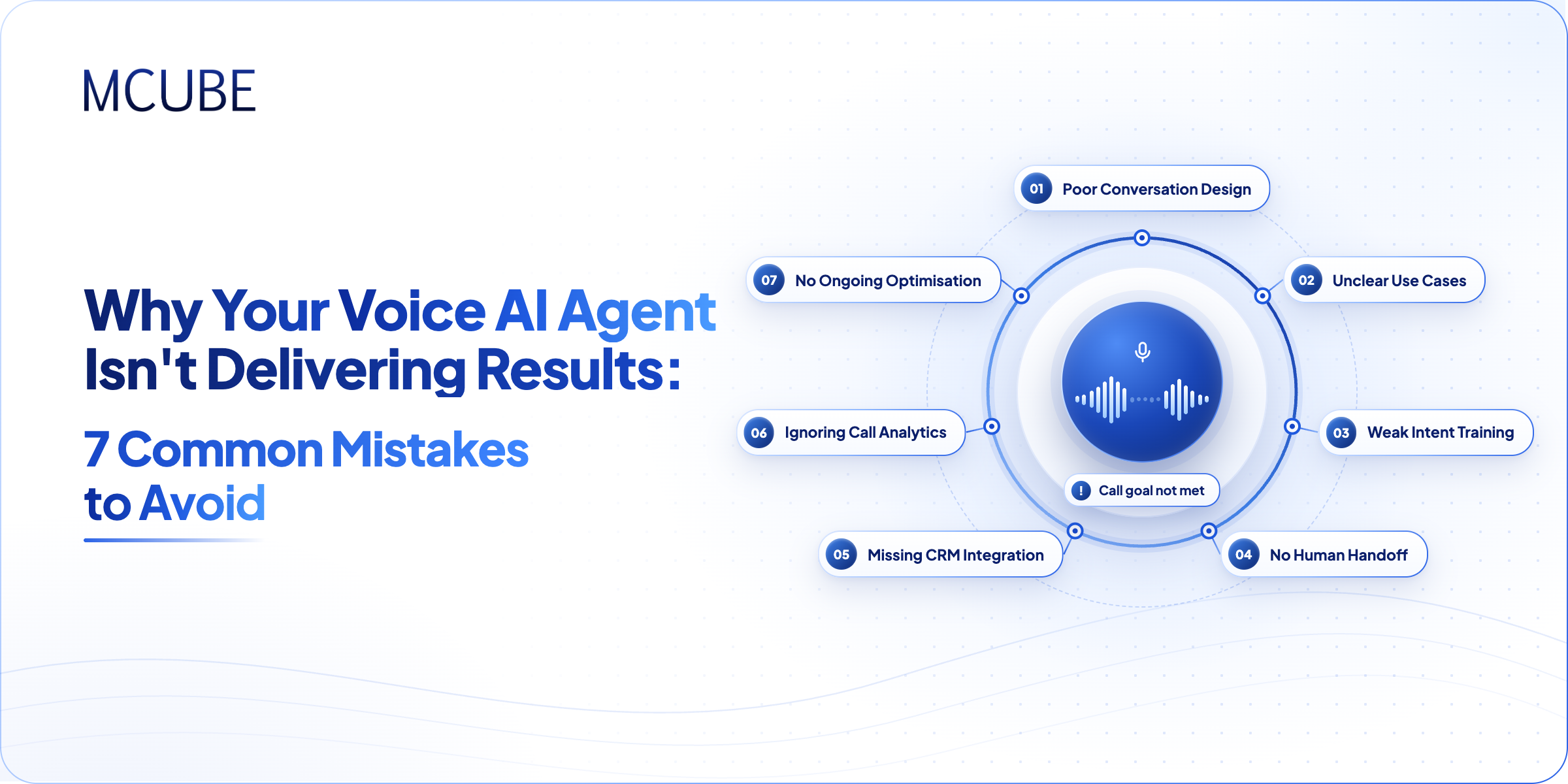
This is where businesses deal with difficulties with a voice AI agent. Automation can answer calls quickly, but if it’s poorly implemented, segmented systems, or the conversations themselves aren’t well-designed, it can impact the call. The aim is not just to automate the call. It is to provide a better customer experience and to generate measurable business results. Here are seven common issues that may cause your voice AI to fail.
Deploying a Voice AI Agent Without a Clear Purpose
Not every customer interaction needs AI. Voice automation is often implied by a business without knowing what tasks it should be automating. This complicates the process of creating meaningful interactions or determining the results of the interaction.
Start with specific use cases. Your agent may be able to qualify leads, schedule appointments, answer common questions, update you on orders or do payment reminders. Establish the criteria for it to handle a call solely and transfer it when necessary.
By clearly defining their role, businesses can train the agent, have reasonable expectations, and evaluate its performance based on the actual requirements of the business.
Using Generic Scripts Instead of Real Customer Conversations
Customers do not always follow a script. They interrupt, restate topics, ask questions, etc. to explain things in their own terms. Programming an AI bot with answers to any questions can be difficult to keep the conversation relevant.
Use actual customer questions, frequently asked questions, product details, policies and common objections to train your agent. Try out variations of how customers can ask the same question.
Conversational AI agents should be able to grasp the context of a conversation, rather than just taking on key words. Relevant responses and follow-up questions increase the usefulness and decrease the frustration of interactions.
Ignoring Language, Accent, and Voice Experience
The robotic voice, long pauses, mispronunciation or trouble understanding an accent may make customers lose interest.
Voice quality is only one part of the experience. Speech recognition should also be robust to various accents and background noise, speaking rates and language preferences.
Train your agent with actual phone calls, such as switching languages and multilingual calls. Be brief, change the speed of talking, and avoid making the caller repeat information unnecessarily.
The more comfortable the interaction feels, the more likely customers are to engage with the automated system.
Failing to Integrate the Agent With Business Systems
An agent that can answer questions but can’t perform tasks makes your team’s work more difficult.
For example, it can confirm an appointment but not update the calendar, qualify a lead without recording it in the CRM, or update an order without checking on the latest information.
| Business Requirement | Integration Required | Expected Outcome |
|---|---|---|
| Lead Qualification | CRM Integration | Automatically records and updates qualified leads. |
| Appointment Booking | Calendar or Booking System | Maps out and explains time and availability for meetings. |
| Order Status Queries | Order Management System | Retrieves an order’s status. |
| Complaint Management | Ticketing Platform | Develops and manages customer support tickets. |
| Customer Verification | Customer Database or APIs | Checks customer information prior to service. |
Connect your AI voice platform with the systems your team already uses. This allows the agent to retrieve information, update records, and trigger workflows during the conversation.
Not Having a Human Handoff Process
While AI can solve many customer issues, it can’t solve them all. If someone complains, has a sensitive question, makes a recurring mistake, or asks for human help, these things should not result in endless automated responses.
Establish clear escalation guidelines. When the agent may not be able to assist, he or she should refer the caller to another team and relay key information from the conversation.
MCUBE features call routing and configurable escalation rules that enable businesses to route calls to the right human agent when needed. This allows customers to do without the need to re-enter the process.
Measuring Call Volume Instead of Business Outcomes
The number of calls handled by AI does not reveal the success of the calls but only how many calls were handled. An agent could be handling hundreds calls and not be able to qualify leads, clear queries, or complete bookings.
Monitor useful data including:
- Resolution rate: What is the percentage of queries that were resolved?
- Lead conversion: How many qualified leads moved to the next step?
- Task completion: Were bookings, updates, or tickets completed?
- Escalation rate: How many calls needed human agents to help?
- Customer satisfaction: Did customers feel satisfied during the interaction?
Businesses use MCUBE’s AI Post Call Analytics to analyze conversations, recognize trends and assess call results to improve them.
Treating Deployment as a One-Time Activity
Customer expectations, business policies, products, and processes change. An agent that performs well initially may deliver inaccurate responses months later if nobody reviews its performance.
Conduct periodic review of call logs, customer feedback, as well as unresolved queries, and failed interactions. Update the Knowledge Base, develop and hone conversation flows, and test changes before deployment.
MCUBE provides conversation logs, testing capabilities, and performance tracking to enable businesses to keep track of their AI Voice Bot and determine if there are areas where improvements can be made.
How MCUBE Helps Businesses Get More Out of Voice AI
MCUBE’s AI Voice Bot enables businesses to control customer interactions with natural dialogue, multilingual assistance, workflow automation, and integrations with the backend. Teams can customize their agent personas, call flows, escalation rules and knowledge sources based on their needs.
It can assist with sales, customer service, and operational workflows by responding to repetitive queries, fetching data, updating systems, and routing complex interactions to human agents.
Having conversation analytics and performance tracking allows businesses to see how calls are being handled, and then pinpoint areas where they can make improvements for automating.
Conclusion
The success of voice automation isn’t just about deploying technology. Better outcomes are achieved through clear goals, applicable training, natural dialogue, systems integration, handoffs with humans, and regular performance reviews.
To ensure voice automation is useful to both customers and your team, avoid these 7 common mistakes. Begin with the appropriate use case, measure what matters and continually strive to improve using actual dialogue.